MORE RONDOR MUSIC

Almo/Irving Rondor Employees
ALMO Sounds History
ALMO Sounds Employees

ALMO & RONDOR GALLERIES:

Almo Music Corp.
Irving Music
Rondor Music International

A&M RECORDS FAST FACTS:

RONDOR MUSIC INTERNATIONAL HISTORY

Almo Music Corp., Irving Music Corp. and Rondor Music
A&M Records Music Publishing Houses

1962

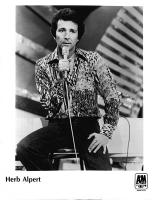
Around the time Herb Alpert and Jerry Moss founded A&M Records, they also established their music publishing business,Almo Music. Almo is the first two letters of each man's last name. Jerry Moss brought Irving Music, named for his father, to the partnership. In its earliest days, A&M Records was a division of Irving Music. Both publishing groups would represent A&M's interests in the United States.

From 1962 until 1976, Almo and Irving's printed sheet music and music books would be manufactured and distributed by a number of manufacturers including Hansen, Key, and Walter Kane.

1966

By now, Almo and Irving Music had a catalog of about 200 copyrights. Most of these were songs written by Alpert, Sol Lake, and members of the Tijuana Brass, and by Julius Wechter and members of the Baja Marimba Band.

Alpert and Moss hired Chuck Kaye to head Almo Irving. Kaye began to increase the number of staff writers and expand the number of copyrights held. The first hit song that was not on A&M was Ruthann Friedman's "Windy" by The Association.

1967

Among the staff writers at Almo and Irving were Paul Williams, Roger Nichols, Kerry Chater, and Jack Conrad.

In August, Rondor Music International was established to handle A&M's international publishing concerns. Rondor was named for sons Ron Moss and Dore Alpert.

1968

One of the most notable hirings was Brenda Andrews. Starting with Almo as a receptionist, over the next 25 years, Ms. Andrews would be promoted to Senior Vice President and become one of the most influential women in music publishing history.

1969

Chuck Kaye negotiated the acquisition of the Beach Boys' Sea of Tunes catalog for $700,000. The deal was finalized on August 29, 1969. It included about 75 songs. Kaye said, "I felt it was important for A&M to be associated with music like this that will stand on its own forever...You literally can't do a film about [the 1960s] without playing Beach Boys music..." and "We're being careful that the music isn't used in any way that would cheapen it." (Billboard, May 17, 1975)

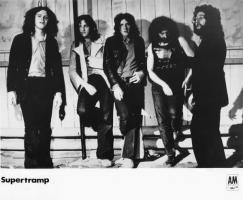
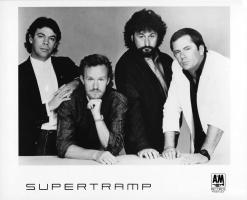
Signed to Almo Irving staff was John Bettis, then lyricist for Richard Carpenter. As artists signed with A&M Records, many were offered music publishing deals, too. In the 1970s, Styx, Joan Armatrading, Chris DeBurgh, Supertramp, Peter Allen, Pablo Cruise, Peter Frampton, the Tubes and others would have Almo Irving as their music publisher.

1972

In July, Michael Arciaga established Almo Productions. This division would offer both complete soundtrack scoring or just the necessary elements. The songwriters on staff at Almo and Irving would be available to write music for feature films and for television.

1973

Billboard reported that Almo Productions was, "probably the first full-service film-TV score operation run by a record company." The division actively sought new projects as film companies announced their plans.

Irving and Almo Music of Canada was established. It was structured as an independent entity and was not a US holding company.

1974

Irving and Almo Music in Canada, like A&M Records there, was designed to acquire both songwriters and copyrights. Their songwriters were paid both a salary and a percentage on cover recordings of their songs. And, Irving and Almo Canada also became active in film and television scores.

1975

In July, Almo Publications was created as the print music division of Almo Irving Music. It was to develop 18 artist folios (music books) for current hit albums by A&M Records artists. Each folio featured the album's graphics on its cover and included artist information and photos with the songs. Ranging from 48 to 64 pages, these books sold for $3.95 to $9.95. Walter Kane provided distribution.

Almo Publications created a jack-in-the-box logo that was first used on October 29, 1975.

In August, Chuck Kaye and Evan Medow hired John Bromell as the first Managing Director of Rondor Music International in Australia. Bromell established the initial office on Mount Street in North Sydney and hired a staff of two to manage royalties, copyrights and licensing of the Almo/Irving and Rondor catalog. Bromell then set about signing local writers including Don Walker, Cold Chisel, Midnight Oil, and the Radiators.

1976

Almo Publications issued 15 music books and 15 pieces of sheet music in its first six months of operation. It would now begin creating catalog collections from its copyrights, music instructions books, and music arrangements for different instruments.

By July, Almo Publications had 60 folios from A&M artists and from outside licensing arrangements for bands like KISS and it planned to release five new folios each month.

Almo Irving Music believed it held 10% of the printed music market and was in a position to develop a direct distribution network so it could be a print house on a par with Warner Brothers Music. It developed inhouse capablities for music licensing and production, art/production, warehousing and sales and then dissolved its distribution agreement with Walter Kane.

In July, Almo Rapid Play was introduced. It was a line sheet music and music books for beginning music students with arrangemnts for piano, organ and guitar with a retail price of $3.95.

On September 24, the Almo Rapid Play logo was used commercially for the first time.

A&M Recording artist and Almo/Irving staff writer Paul Williams won the Oscar for Original Song for "Evergreen," his collaborative effort with Barbra Streisand for the remake of "A Star Is Born."

1977

Chuck Kaye was promoted to President, Irving/Almo and Rondor Music.

Almo signed Burt Bacharach and Hal David, gaining control over their older material and new songs from the team. Catalogs from Ray Stevens (Ahab Music) and Fred Ahlens were signed to exclusive print representation deals.

It was a year of expansion as Irving/Almo and Rondor moved to strengthen its Australian operation and expand its folios line.

1978

On June 18, the Almo Publications jack-in-the-box logo achieved registered trademark status. Almo Rapid Play's logo would be registered effective July 18, 1978.

1980

Irving/Almo and Rondor signed with Columbia Pictures Publications for distribution.

1981

On January 1, Rondor Music opened its Paris office with the intent to acquire international catalogs.

Also on January 1, Almo/Irving opened an office in Nashville to develop staff writers and expand its catalog. It went on to sign some of the most prominent country music writers including Rhonda Kye Fleming, Waylon Jennings, and Kent Robbins.

Later in the year, Almo/Irving and Rondor acquired the East Memphis Music catalog. East Memphis held many of the publication rights to songs from Stax Records. Primarily soul music, this catalog brought Otis Redding, Steve Cropper, Booker T. Jones, Isaac Hayes, Eddie Floyd, Al Green, Bettye Crutcher and other talented songwriters into the Almo/Irving family.

Almo/Irving aslo acquired the JEC catalog that featured songs written by Les McCann.

1982

John Bromell left his position with Rondor Music Australia and was succeeded by Bob Aird. Aird remained with Rondor through its sale to Universal Music Publishing Group and ultimately became the Managing Director of Universal Music Publishing Group.

1984

On December 25, the Almo Publications jack-in-the-box trademark was cancelled.

1985

The Almo Rapid Play logo was cancelled as a trademark on March 5.

1987

The Almo/Irving published song "How Will I Know" was the Grammy's Song of the Year.

1988

For the second straight year an Almo/Irving song was Song of the Year at the Grammys. This time it was "I Wanna Dance with Somebody (Who Loves Me)."

1989

On September 18, Brian Wilson filed a $100 million dollar law suit against A&M Records, Almo-Irving Music and the law firm of Mitchell, Silverberg & Knupp. Wilson alleged fraud, breech of contract, misrepresentation and an accounting of royalties for his Sea of Tunes catalog. Wilson claimed that he did not know that his attorney for the sale, Abe Somer, also represented A&M and Irving Music and was on A&M's board of directors. He also claimed that Mitchell, Silverberg & Knupp did not tell him that he could establish ownership of his copyrights and ownership interest in Sea of Tunes and thereby prevent the sale of the catalog. And, he claimed that he was never paid for the sale of Sea of Tunes. Wilson's attorney estimated the songs earned about $3 million a year and were worth $30-$40 million. The suit was settled in 1992.

1990

After the sale of A&M Records to PolyGramm the name Almo/Irving was no loonger used. The company name was Rondor Music International.

Rondor Music bought Leon Russell's Shelter Music.

Almo/Irving won its first songwriting Grammy for Julie Gold's "From a Distance," the theme music from the Bette Midler movie "Beaches." Almo/Irving also took home Song of the Year with Eric Clapton's "Tears from Heaven."

1994

When Alpert and Moss started their second label, ALMO Sounds, it was created as part of Rondor Music International.

1995

Billboard reported that the combined Almo/Irving and Rondor had 20,000 titles in its song catalog. It increased its holdings 100 times since 1966. In 1995, it acquired all the I.R.S. Music and Bugle Music catalogs.

Rondor had four thrusts: artist development, film and television licensing, catalog acquisitions and publishing relationships. Part of its artist development program was to produce demos for writers signed to the house and then help them get recording contracts with different labels.

1996

In February, Ralph Simon was named president of Rondor Music and ALMO Sounds in Great Britain.

1997

Rondor Music bought the Squeeze catalog of songsm Javaberry Music. This was an 80-song catalog by Chris Difford and Glenn Tilbrook and it included 31 titles the band had not recorded.

Will Jennings and James Horner's "My Heart Will Go On" from the movie "Titanic" won the Grammy for Song of the Year and Oscar for Original Song.

2000

By now, the catalog included some 60,000 copyrights. Almo, Irving and Rondor had acquired the East Memphis catalog of Stax Records, and the suite of music publishers affiliated with I.R.S. Records including I.R.S. Music, Illegal Music and Bugle Music and enjoyed publishing arrangements with many top songwriters from the last 40 years.

Universal bought Rondor Music and Almo Sounds for nearly $500 million. This sale was also to be the settlement of outstanding lawsuits filed by Alpert and Moss against Universal. The sale became effective in December 2000.

2002

Rondor Music International signed Avril Lavigne to a worldwide publishing deal.

2003

In its Summer 2003 newsletter, Universal Music Group reported Ron Moss was promoted to Vice President of A&R. His responsibilities included new signings, artist development and exploitation of the catalogs. Among the artists he signed were Avril Lavigne, Saliva, Soil and Patty Griffin. At the same time, Bobby Rymer was appointed VP of Almo/Irving Rondor Music Nashville.

During the week of September 22, 2003, Rondor Music International in London was closed permanently and on October 3, 2003, Almo/Irving/Rondor Music Nashville was also closed permanently and absorbed into Universal Music Publishing. The Nashville consolidation affected eight employees and 22 staff writers.

Emmylou Harris was honored with a limited edition collection of 17 of her songs from 1982-2002 titled The Road I Am Taking.

Rondor signed Obie Trice to a worldwide publishing agreement.

2007

When Universal bought BMG Music Publishing in 2007, the European Union would only authorize the purchase if Universal sold $135M (USD). Universal agreed to the terms and began to sell Rondor Music UK's copyrights.

SOURCES:

1. A&M Records 10th, 15th and 25th anniverary books.
2. Billboard. Brian Wilson Seeks Song Royalties in $100 Mil Suit. Chris Morris. September 30,
    1989.
3. Billboard, Universal Publishing Absorbs Rondor in London. September 24, 2003.
4. Billboard. Rondor Music International Nashville Consolidated into UMPG. October 1, 2003.
5. Billboard. Rondor, UMPG Consolidate Operations in Nashville. October 1, 2003.
6. Billboard. UMG Axe to Fall with 800 Layoffs Planned Worldwide. October 16, 2003.

    Translate this page:
    Translate this page to Chinese   Translate this page to French   Translate this page to German   Translate this page to Italian
    Translate this page to Japanese   Translate this page to Korean   Translate this page to Portuguese   Translate this page to Spanish

Contact On A&M Records

Site Map