MORE A&M STUDIOS

Studio A
Studio B
Studio C
Studio D
A&M Studio Equipment

A&M Records History

ARTIST NEWS SEARCH:
Enter any artist or band name and select dates to search.


WAS THIS ALBUM ISSUED ON CD?

Enter Album Title:

Database to search:
U.S.       International

Artist Name (Optional):

BUY A&M CDS AND DVDS:


Search the world
for your music!


A&M STUDIOS HISTORY


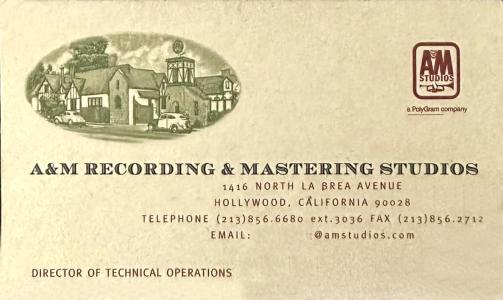
In April 1967 A&M Records began construction on its studios at its headquarters on the old Charlie Chaplin Studios at 1416 N. LaBrea Avenue in Hollywood, CA. There were two soundstages on the property. A&M kept the newer soundstage and turned the older one into its studio complex.

By late 1967, two of A&M's studios were in operation. Original plans called for only two studios but the artist roster grew enough that a third studio was added and opened in early 1968. Even the first versions of these studios were, according to Larry Levine, "developed to provide a creatively conducive atmosphere" with drapes, incandescent lighting, and specially selected chairs instead of the typical fluorescent lights and folding chairs. A&M also included moving ceilings to create different sonic moods. The original studio equipment was from 3M, Scully and the Holzer HAECO-CSG sound system. Howard Holzer also designed, built and installed the custom constructed recording and mixing consoles.

HAECO was the acronym for Holzer Audio Engineering Company. Billboard reported that "the unit allows sound information to pass through from the right and left channels, but places a hold on the center channel information whose amplitude is doubled when it is combined into a single monaural source for radio broadcasting." Billboard also reported in January 1968 that A&M's first monaural single to use the system was by Lee Michaels and Claudine Longet would be first stereo use, however the singles by these artists released around that time were not marked as HAECO-CSG. The first records from A&M marked as HAECO were released starting in September 1968.

A&M Studios added mixing/cutting rooms and reverberation chambers in 1969.

The first A&M album with recording credit at A&M Studios was The Fool on the Hill by Sergio Mendes and Brasil '66.

Herb Alpert hired Larry Levine as the first engineer in 1967. Before joining A&M, Larry Levine was an engineer at Gold Star Studios, Alpert's preferred place to record. Alpert based the construction of A&M's Studio B on the Gold Star studio. While at Gold Star, Levine engineered sessions for A&M artists including the Tijuana Brass, Chris Montez, Brasil '66 and Ike and Tina Turner.

Alpert and Moss nurtured the studios and the engineers. Not only were fine acoustics a priority, only top recording engineers, mastering engineers and technical engineers graced the studios. The technicians built and refurbished equipment. A&M album covers tell the evolution of recording at A&M from four-track to eight-track to 16-track to 32 then 48-track to digital mastering.

A&M told Billboard in 1970 that it had invested over $1M in three 16-track studios, two mastering rooms and three mixdown rooms.

Following are two photos from an A&M Studios ad in Billboard from late in 1977.
A&M Studios Photo 1977     A&M Studios Photo 1977

By 1997, A&M Studios had a staff of 40 people supporting five studios with eight live chambers, a remix/mixdown suite and the Chaplin/A&M Soundstage. From the day it opened until it was closed by Universal Music Group in 1999, the term most often associated with A&M Studios was "world class."

Three examples of the equipment hint at the dedication to creating and maintaining a top recording facility. First is the Neve 4872 Console in Studio A. This was the last board built by Rupert Neve in 1978. It was originally owned by George Martin and AIR Studios and was installed at the Montseurrat facility. Alpert and Moss bought the Neve in 1986 and continued to enhance it until they sold A&M Records. The second is the classic microphone collection. There was a perfect choice to enhance the sound of any artist. Finally, A&M owned an extensive catalog of outboard equipment. Full lists of the mics and outboard gear appear on our Studio Equipment page.

The engineering staff was a Who's Who of the best people in the field. Larry Levine, Henry Lewy, Ray Gerhardt and Dick Bogert came to the studios in 1967. Larry Marks and Bernie Grundman started with A&M in 1968. Levine as an engineer, Marks as a producer and Grundman founded A&M's Mastering Division and managed it until 1982 when he opened his own studio. Henry Lewy became a producer with A&M in 1970. Karl Bischof arrived in 1971 to design, redesign and maintain the equipment. Also in 1971, Tom (Beno) May, became the head of the Studios. All told, he would have more than 20 years experience in mastering. Roger Young, Don Hahn, Roy DuNann, Tommy Vicari, Bruce Botnick, Bruce Swedian, Stewart Whitmore and Ron Rutledge who continued to manage the studios after the lot was sold to the Jim Henson Co. ...just a few of the many talented A&M Engineering Staff.

The A&M Studios were an immediate hit with the label's own artists. Although A&M allowed artists to record in any studio in the world, A&M, Ode, Dark Horse, I.R.S., Windham Hill and Word artists all recorded at A&M. Here are just a few names:

Joan Armatrading
Hoyt Axton
Burt Bacharach
Captain and Tennille
Cheech and Chong Joe Cocker
Peter Frampton
Quincy Jones
Carole King
Bill Medley Billy Preston
Soundgarden
Cat Stevens
Supertramp
Rick Wakeman

Other A&M artists chose to record in studios other than A&M but had their work mastered in A&M Studios. When Windham Hill Records beecame an A&M affiliate, it asked that only Bernie Grundman master its recordings.

The studios were not only home to many A&M artists, they were rented by artists on other labels. More than 100 artists have albums noting they were recorded or mixed at A&M Studios. Among the most famous:

Paul Anka
Black Sabbath
George Burns
Richard Burton
Vicki Carr
Cher
Chicago
Phil Collins
Ray Coniff
The Doors
Ferrante and Teicher Foreigner
George Harrison
KISS
John Lennon
Manhattan Transfer
Barry Manilow
Johnny Mathis
Randy Newman
Ozzy Osbourne
Pink Floyd
The Rolling Stones Carly Simon
Bruce Springsteen
Buffie Saint Marie
Steely Dan
Barbra Streisand
The Supremes
Dionne Warwick
Andy Williams
Stevie Wonder
Neil Young

Billboard reported that Universal Music Group closed A&M Studios on October 2, 1999.

STUDIO A

Studio A had tracking, overdub and remixing capabilities. Among the famous recordings to come from Studio A are:
      "We Are the World" by USA for Africa
      Herb Alpert remixed his Fandango album and recorded Blow Your Own Horn
      Joan Baez's Diamonds and Rust album
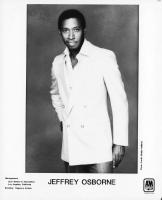
      Jeffrey Osborne's self titled album
      Lani Hall's Es Facil Amar album was mixed in Studio A

According to the defunct A&M Studios web site, artists entered Studio A through its control room. The control room was about 19' by 22'. (All dimensions are approximations because the studio complex contained many walls that were set on angles.) On the left side of the control room was a vocal ISO booth. Two more ISO booths were on the right side of the studio. One was about 16' by 20' and the other was 20' by 26'. The control room windows looked out into the main recording room with its 20' ceiling. The main area was about 38' by 39'.

STUDIO B

With tracking and overdub facilities, this is the studio Herb Alpert patterned after Gold Star. Studio B was accessed through an 18' by 19' control room. It had two small ISO booths, one on each side of the control room. The main recording room was 20' by 30'.

Among the artists to mix albums in Studio B are Bruce Springsteen's Unplugged and Melissa Etheridge's self-titled album.

Studio was completed by a private lounge and a very large crystal that Herb Alpert found.

STUDIO C

Studio C was the smallest with just a control room and main recording area measuring 14' by 21. It served as A&M's multichannel mixing and pre-mastering studio. Crosby, Stills and Nash used Studio C as did Dave Koz for his Off the Beaten Path album.

STUDIO D

Tracking and overdub capabilities. Enetered through a 20' by 21' control room, two isolation chambers were set off on the left side. The main recording room was 28.5' by 34' with an 18.5' ceiling. Behind the main room were two more ISO booths, one 14' by 18' and the other 16' by 18'. Studio D also had a private lounge and bath.

Studio D was chosen for the 3M multi-track tape machine that Herb Alpert tested when he recorded his Rise album in 1979. He also recorded his Magic Man album in D.

STUDIO H

Herb Alpert recorded My Abstract Heart here and Lani Hall used Studio H to record her vocals.

A&M SOUNDSTAGE/CHAPLIN SOUNDSTAGE

Parts of the Tijuana Brass television specials were filmed on the soundstage. Alpert would later record with Hugh Masekela The Main Event Live album here. The Carpenters with the Overbudget Orchestra (Los Angeles Philharmonic) recorded "Don't Cry for Me Argentina" in front of an audience of music journalists. The size of the soundstage and its versatility lent it to tour rehearsals. Probably the most famous tour rehearsal was Joe Cocker's Mad Dogs and Englishmen . The soundstage also hosted countless listening parties for new A&M products as well as other events. Many A&M promotional films and music videos were shot on the soundstage. Among the promotional films, the earliest Carpenters performance videos, "Every Breath You Take" by The Police in 1983, Jeff Beck's "Ambitious" and Michael Jackson's "Liberian Girl."

STUDIO M

M for Mixing, mixdown and remix in this dedicated suite. The control room measured 14' by 18' and its lounge/overdub booth was 9' by 10'.

Console:
    72-channel/144-input SSL SL-6072E
        with Total Recall and
        G-Series Automation
    Flying Faders Automation

Tape Machines:
    Two Studer A800 Multitracks
    Studer A820
    Ampex ATR-102 two-tracks
    Two TimeLine Lynx synchronizers

Mixdown/Reference:
    A&M proprietary A-to-D and D-to-A
        converters
    Sony PCM-7010 Timecode DAT
    Panasonic SV-3700 DAT
    Phillips CD player
    Tascom Model 122 Mk III cassettes

Main Monitors:
    Custom A&M/Augspurger systems

Near Field Monitoring:
    Yamaha NS-10Ms


Outboard Equipment:

    Compressor/Limiter:

        Fairchild 670
        UREI LA-2a, LA-3 and 1176
        dbx Model 160 and Model 160x

    Mic Pre-Amps/EQ:
        Neve Model 1066 modules
        Pultec EQP-1A3, EQP-1A and EQH-2
        GML Model 8200

    Reverb/Effects:
        Eventide H-3500
        Lexicon 480L, PCM-80 and PCM-70
        AMS RMX-16
        Yamaha 990, Rev 5, Rev 7 and SPX-90

    Delays/Effects:
        AMS DMX
        Lexicon PCM-42
        Roland SDE-3000
        TC Electronics 2290
        Eventide 949

    Gates/Proc:
        Drawmer DS-201 gates
        dbx Model 902 de-esser
 

SOURCES:
1. Equipment lists appeared on A&M Records web site in 1996 and in A West Coast Phenomenon–the Studio That Charlie Built: Former A&M Studios, Hollywood: A state-of-the-art facility with a colorful past, and an emphasis on vintage technology by Mel Lambert, November 1997.
2. A&M Is Creating Sutdios in Tune with Creative Artists. Billboard, November 11, 1967.
3. 2 Studio of A&M Roll--3d Put in Gear. Billboard, December 21, 1968.
4. Former A&M Studios website. Stephen Barncard. October 25, 1996.
5. A&M Recording Studios by Stephen Barncard.

    Translate this page:
    Translate this page to Chinese   Translate this page to French   Translate this page to German   Translate this page to Italian
    Translate this page to Japanese   Translate this page to Korean   Translate this page to Portuguese   Translate this page to Spanish

Contact On A&M Records

Site Map