ODE RECORDS




ODE RECORDS FOUNDING AND EARLY YEARS (1966-1970)
Lou Adler was an old friend and lyric writing partner of Herb Alpert. At one point, Adler, Alpert and Jerry Moss all worked for Alden Music. The original partnership between Adler and Alpert in the late 1950s until 1960 was Herb B. Lou Productions. As a team they wrote, with Sam Cooke, "Wonderful World;" they produced Jan and Dean's "Baby Talk" and Dante and the Evergreen's "Alley Oop." After dissolving their partnership, Alpert teamed with Jerry Moss to create A&M Records. Adler went on to found Dunhill Records in 1964 where he signed and recorded The Mamas and Papas. He sold Dunhill to ABC-Paramount in 1966. In 1967, Adler produced the Monterrey Pop Festival.
Adler founded Ode Records in 1968. For its first two years of operations, Columbia Records distributed Ode. In 1970, Adler made a manufacturing and distribution agreement with A&M Records that lasted until 1976.
The Ode logo (each letter inside the next) was first used commercially in 1967. Originally, the logo was inside a box. Next came the Ode 70 version still retaining the letter inside a letter design. Finally, the same art was rendered with the word Ode typeset beneath it. The trademark remains active. A&M printings of Ode Records used the Ode 70 logo on the first nine albums (SP 77001 through SP 77009), then dropped the "70" from the logo.
As Ode began its association with A&M, on April 1, 1970 Adler brought Barry McGuire and Scott McKenzie's previous Ode recordings into the new deal. He also had an ongoing association with Carole King from her days in the group The City. Cash Box reported that A&M bought all of Ode's masters from its time with CBS except for those by Spirit. The arrangement with Ode Records was A&M's first worldwide distribution of another label.
As if hinting at things to come, Carole King's first Ode album Writer was in the Top 100 on the Billboard Pop Album chart.
Adler told Record World, "Ode is like the other A&M label. I seek the opinions of Herb Alpert and Jerry Moss, not as a matter of policy but as a matter of course because I respect their taste. As far as I'm concerned, Ode will be with A&M forever. The artists that I have are certainly happy with the A&M distribution and happy with every facet of the A&M operation. And I am also a graphics nut and A&M has the finest."
TAPESTRY (1971)
In 1971, Carole King released her Tapestry album. It was one of the top-selling albums of all time with sales estimated at more than 14 million copies. Tapestry was also one of the all-time records on the Billboard Pop Album chart remaining on the chart for 302 weeks--nearly six years. Tapestry was #1 on the Billboard chart for 15 weeks and King was the #1 Female Vocalist on every poll. Billboard's Top Single Artist #8 was Carole King for two of her Ode singles. Adler was named Producer of the Year for the album. Songs from Tapestry won in every Grammy category for which they had been nominated. King was the first woman to will all of the Grammy's most prestigious awards, Album of the Year, Song of the Year ("You've Got a Friend"), and Record of the Year ("It's Too Late"). Ms. King also had a second #1 album with Music and a #1 and a Top 20 single on the Billboard Pop Singles chart.
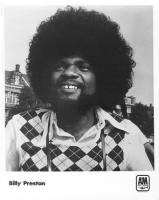
A promotional film featuring Carole King, David T. Walker, Merry Clayton and Billy Preston was produced in 1971.
In September 1971, the comedy team Cheech and Chong was signed and began enjoying success. They had a Top 10 single on the Billboard Pop Chart.
ODE RECORDS ADDS COMEDY ALBUMS TO ITS CATALOG (1972)
Carole King won a 1972 Billboard Trendsetter Award "for bringing personal statement songs into a pre-eminent position within the mainstream markets."
In 1972, Carole King's Music album was Ode's first album to be released in quadrophonic format. The album produced one Top 40 single. Carole was the #1 Top Album Female Vocalist, the #5 Top New Album Artist, the #13 Top Album Artist, the #2 Top Singles Female Vocalist, the #4 Top New Single Artist and the #3 Top Singles Easy Listening Artist in Billboard's annual rankings. Her single "It's Too Late/I Feel the Earth Move" was #3 on Billboard's Top Pop 100 Singles and #1 Top Easy Listening Single. Her single "so Far Away/Smackwater Jack" was #31 on Billboard's Top Easy Listening Singles rating. Tapestry was the #2 Top Popular Album in Billboard's annual review. Ode Records released the original Broadway cast recording of An Evening with Richard Nixon. The play, based on a book by Gore Vidal, ran from April 30 until May 13, 1972. Actress Susan Sarandon made her Broadway debut playing Tricia Nixon.
On May 5, the original cast of "An Evening With Richard Nixon" recorded the album. The musical opened later in the month.
Ode Records had its first week of sales over $1 million during the week of August 4. Total sales were $1.4 million.
On September 27, 1972, ABC News filed a television special on Cheech & Chong.
Lou Adler was the #12 Top Producer in Billboard's annual ranking.
Work on the Tommy album began in September 1971. In March 1972, recording began. In June, work on the album package began. The album shipped gold in November 1972. Billboard reported that the double album debuted on 35 major radio stations.
From 1970 until November 1972, all Ode Records products released in Britain used the A&M label and stock numbering system. The first release in Britain to use the Ode label and stock number was Carole King's Rhymes & Reasons.
Lou Adler established Ode Visual to develop films about record industry people. He intended to elevate the quality of films featuring artist performances, It was headquartered in Los Angeles at A&M Records.
ODE RECORDS AND THE ARTIST ROSTER THAT COULD (1973)
1973 was Ode's biggest year on the Billboard pop charts. Carole King had a Top 10 album and David Walker's album was Top 200. Carole King had two Top 40 singles and Tufano and Giammarese (formerly with The Buckinghams) had a Top 100 single. On the Pop Singles chart, Cheech and Chong placed singles in the Top 20 and Top 40 and took home the Best Comedy Album of the Year Grammy for Los Cochinos. The London Symphony Orchestra's Tommy, lavishly boxed in a slip case with custom graphics and full color book won the Best Album Cover Grammy Award. Its retail price was $12.98.
Cash Box reported that between January 1, 1970 and August 31, 1973, Ode released 16 albums that sold 29.7 million copies worldwide. Ten of the albums charted with eight of them in the Top Ten and six were #1 on the charts. Seven of the eight albums went platinum or better--four by Carole King, three by Cheech & Chong and the London Symphony Orchestra's double album Tommy.
In December, Lou Adler announced he signed a new 3-year distribution agreement with A&M Records. Adler said, "I feel comfortable and at home at A&M. We respect each other and the way we operate our companies....Similarly, A&M understands me and my operation as well as my business and music philosophy." At the time of renewing the contract, Adler had offers to buy Ode Records. He said, "Having total autonomy and being able to personally control every aspect of the Ode operation is the main reason I didn't want to sell the company. For no matter how many promises of total autonomy, and no matter how many codicils are written into a contract, one less certain degrees of freedom and independence to act when one is acquired. Sometimes this loss is subtle, sometimes it isn't, but after 15 years of producing and directing talent, I know that any degree of loss is to be avoided at all costs."
ODE RECORDS FORMATS AND PRICES
| YEAR | SERIES | ALBUM | CASSETTE | CD |
|---|---|---|---|---|
| 1973 | ODE SP 77000 | $5.98 | $6.98 | NA |
THE FANTASY YEAR THAT WAS REALLY ROSIE (1974)
In 1974, Carole King continued topping the charts with Fantasy her third #1 Ode Records album on the Billboard Pop Album chart. She also had three Top 10 singles.
Ode's artist roster was small but talented--11 RIAA gold albums plus six platinum album certifications out of a total of 38 albums released as well as six Grammy Awards between 1971 and 1973.
Carole King delved into children's music for Really Rosie in 1975. The album was the soundtrack for a CBS TV special based on a Maurice Sendak book. This was Ode's only children's recording. Ode took the marketing into bookstores plus department store toy and children's clothing sections with special display racks and a print advertising campaign targeted to newspaper's children and book sections, family and home magazines.
1975
In 1975, Carole King was back on the Billboard Pop Album chart with yet another Top 10 and Top 20 album. She had albums on the Billboard charts each year since 1970. Her singles continued to be in the Top 40 and Top 100. King's singles charted five years in a row. Cheech and Chong Tom Scott each had one Billboard Top 100 pop single.
ADDING MOTION PICTURES TO ODE RECORDS (1976)
In 1976, David Walker had a Top 100 album while Cheech and Chong had a Top 100 single.
Carole King was the #67 Top Pop Album Artist and the #8 Top Pop Album Female Artist and her Thoroughbred album was rated at #85 of Billboard's Top Pop Albums for the year.
Adler had supervised Really Rosie. Now, he moved into film with The Rocky Horror Picture Show.
Lou Adler was the #89 Top Pop Producer in Billboard's annual Talent in Action.
In 1976, Adler moved Ode Records distribution to Epic Records. When he left A&M, the Ode Records catalog included 72 singles and 41 albums. By 1978, he deactivated the label because he wanted to pursue film.
ODE SOUNDS AND VISUALS (1989)
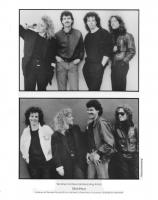
In January 1989, Adler reactivated the label now named Ode Sounds and Visuals and entered into a pressing and distribution arrangement with A&M Records. Adler told Chris Morris of Billboard about his agreement with A&M, "I played [the Cool'r] demo for Herb Alpert to see if A&M was interested. He suggested that I produce them, and from that we got to reactivate Ode. It's [the reactivation] more or less open. As long as we want it to go, it'll go." A&M would handle promotion, distribution and sales and Ode staff would handle back catalog. The first release was on January 24 with the single "Victim" by Cool'R. At the time of the reactivation, Adler brought only one other new artist to the roster, Native. They would be the only artists on Ode until A&M was sold to PolyGram later in the year.

SOURCES:
A&M to Handle Adler's Ode 70; Label's First Dist. Arrangement. Cash Box March 28, 1970.
Adler Ode Label A&M's First Independent. Record World, May 22, 1971.
Ode Records Reactivated. Chris Morris. Billboard, January 21, 1989.
Lou Adler Forms Ode Visual. Record World, April 29, 1972.
Ode's Mil $ Week. Record World, September 9. 1972.
"Tommy With a Splash. John Gibson. Record World, December 12, 1972.
Ode Retains A&M Ties; Adler Cites 'Mutual Respect.' Record World, December 29, 1973.
Ode Testing New Areas for King TV Soundtrack. Billboard, February 22, 1975.
Billboard 1972 Trendsetter Awards. Billboard, December 25, 1971, TA-20.
'Tommy' LP Spurs Xmas. Nat Freedland. Billboard, December 19, 1972.
Whitburn, Joel. Joel Whitburn's Top Pop Albums 1955 - 1996. Menomonee Falls, WI: Record Research, Inc., 1996.
Whitburn, Joel. Top Pop Singles 1955 - 1999. Menomonee Falls, WI: Record Research, Inc., 2000.
Whitburn, Joel. Top Adult Contemporary Singles 1961 - 2001. Menomonee Falls, WI: Record Research, Inc., 2002.
Whitburn, Joel. The Billboard Book of Top 40 R&B and Hip-Hop Hits 1942-2004. New York: Billboard Books, 2006.
Whitburn, Joel. Top R&B Albums 1965-1998, Menomonee Falls, WI: Record Research, Inc., 1999.
There are thousands of artists on the ON A&M RECORDS website. Click on a photograph to take you to a new artist!